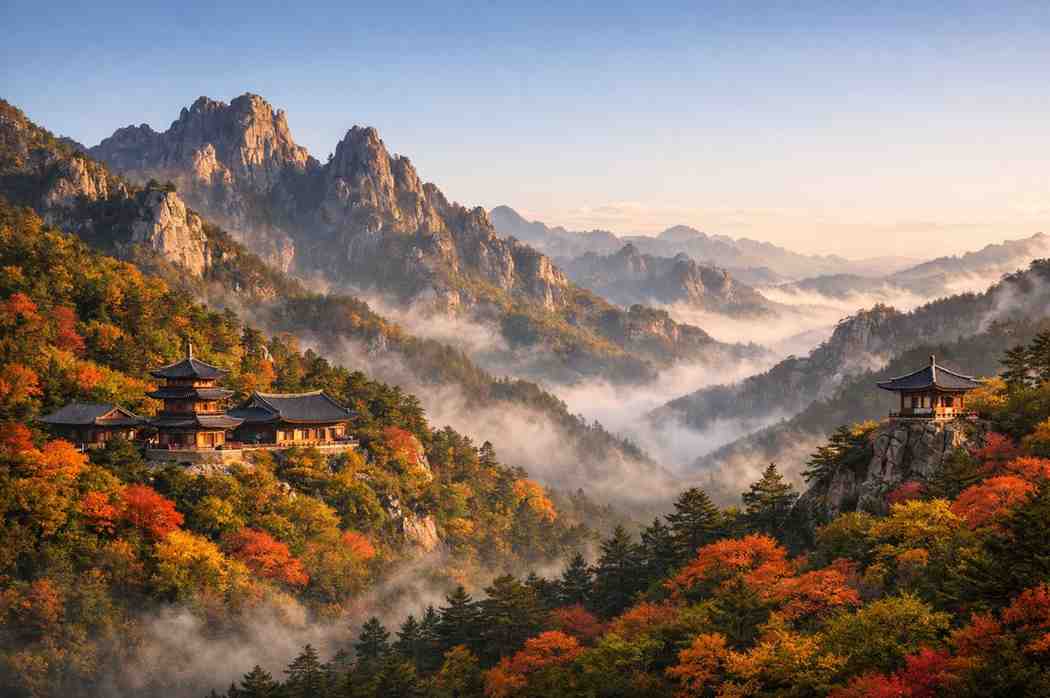
Rising majestically in North Pyongan Province, Mount Myohyang is one of North Korea’s most famous natural landmarks. Known for its steep cliffs, dense forests, and striking rock formations, Mount Myohyang is both a natural and cultural treasure. The name Myohyang translates to “Mysterious Fragrance Mountain,” reflecting the serene beauty and mystical aura that has captivated visitors for centuries.
This mountain is also home to historic Buddhist temples, cultural heritage sites, and unique flora and fauna, making it a destination that combines natural splendor with cultural significance.
Geography and Natural Beauty
Mount Myohyang rises to an elevation of approximately 924 meters and is part of a larger mountainous region that stretches across North Pyongan Province. Its landscape is characterized by:
- Jagged granite cliffs and steep valleys
- Dense forests filled with pine and maple trees
- Clear mountain streams and waterfalls
- Unique rock formations that attract climbers and photographers
The mountain’s varied terrain provides a habitat for diverse wildlife, including native birds and plant species that are protected within the surrounding park area.
Historical and Cultural Significance
Mount Myohyang is not only a natural wonder but also a cultural and spiritual landmark. It is closely associated with Buddhism in Korea, with several temples and monasteries located on its slopes.
Pohyon Temple
One of the most famous cultural sites on Mount Myohyang is Pohyon Temple, a historic Buddhist temple dating back to the 11th century.
- It features traditional Korean architecture and ornate pagodas.
- The temple has been a center for religious practice and pilgrimage for centuries.
- It contains numerous cultural relics, including ancient scriptures, statues, and paintings.
Visitors to Mount Myohyang often combine nature exploration with a visit to this culturally significant temple.
Myohyangsan International Tourist Zone
In recent years, parts of Mount Myohyang have been designated as the Myohyangsan International Tourist Zone. This area provides structured trails, observation points, and accommodations for tourists.
- Scenic hiking trails allow visitors to explore the mountain’s valleys, cliffs, and waterfalls.
- Observation points offer panoramic views of the forested slopes and rock formations.
- Cultural centers in the zone showcase traditional arts, crafts, and local history.
The tourism zone aims to balance accessibility for visitors with preservation of the mountain’s natural and cultural heritage.
Seasonal Attractions
Mount Myohyang offers beauty throughout the year, with each season presenting a unique experience:
- Spring: Blooming flowers and fresh greenery create a vibrant landscape.
- Summer: Cool mountain air offers respite from the lowland heat, ideal for hiking.
- Autumn: Maple and ginkgo trees turn brilliant shades of red, orange, and gold.
- Winter: Snow-capped peaks provide a serene and picturesque winter scene.
Photography enthusiasts often visit during autumn for the breathtaking fall foliage.
Flora and Fauna
Mount Myohyang is rich in biodiversity. The forested slopes are home to:
- Pine, oak, maple, and ginkgo trees
- Rare medicinal herbs and alpine plants
- Birds such as pheasants, woodpeckers, and migratory species
- Small mammals and other wildlife adapted to mountainous terrain
The mountain’s ecological diversity contributes to its status as a protected area.
Adventure and Hiking
For adventure seekers, Mount Myohyang offers hiking and trekking opportunities ranging from gentle walks to challenging climbs:
- Trails connect cultural sites, waterfalls, and scenic viewpoints.
- The steep granite cliffs provide opportunities for experienced climbers.
- Streams and waterfalls along the trails create natural rest points and photo opportunities.
- Guided tours are recommended for first-time visitors to navigate trails safely and learn about the mountain’s history and ecology.
How to Visit Mount Myohyang
Mount Myohyang is accessible from Pyongyang, North Korea’s capital, typically via organized tours. Visitors can explore:
- Scenic hiking paths
- Historical and religious sites
- Cultural exhibitions and artisan workshops
While travel to North Korea is strictly regulated, Mount Myohyang remains one of the country’s premier destinations for natural and cultural tourism.
Why Mount Myohyang Is Unique
- Combines natural beauty with historic temples and cultural landmarks
- Offers rare biodiversity in a protected mountainous environment
- Provides hiking, photography, and spiritual exploration opportunities
- Seasonal changes create a dynamic landscape year-round
- Its combination of mysticism, history, and natural splendor makes it a distinctive mountain on the Korean peninsula
Conclusion
Mount Myohyang is a captivating destination where natural landscapes meet cultural heritage. From the ancient Pohyon Temple to the dense, misty forests and panoramic viewpoints, the mountain offers a serene escape and a glimpse into the spiritual and ecological richness of North Korea.
🌄 In the end, Mount Myohyang is more than just a mountain—it is a harmonious blend of nature, history, and culture, offering visitors a truly unique experience in East Asia.