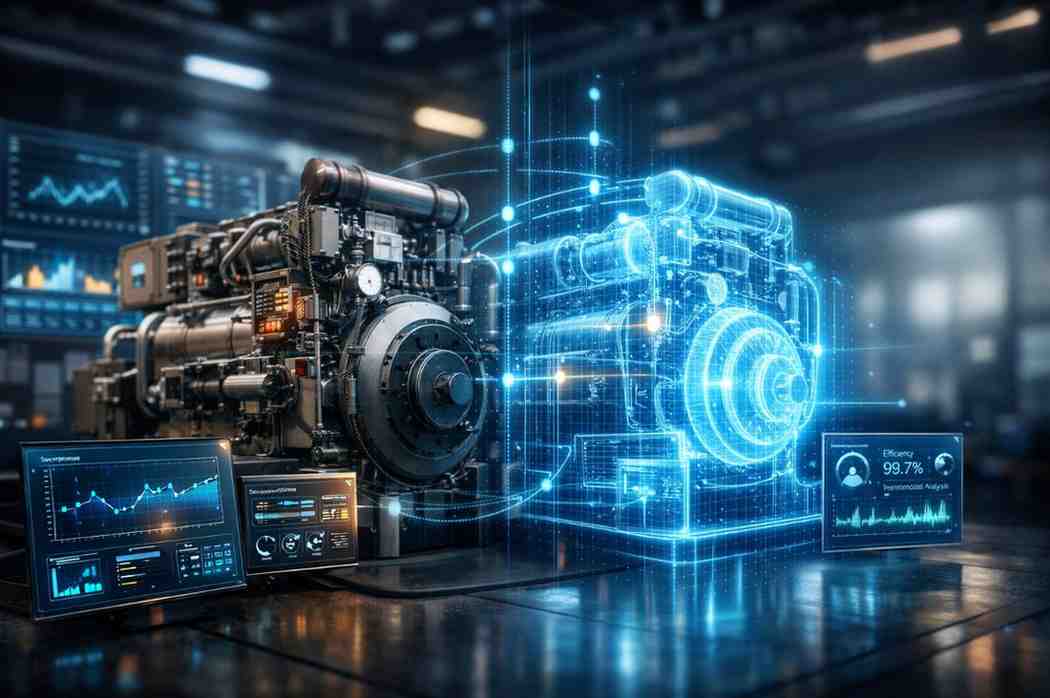
In the era of rapid technological advancement, Digital Twin technology is emerging as one of the most transformative innovations in modern industry. By creating a virtual representation of a physical object, system, or process, digital twins allow organizations to monitor, analyze, and optimize real-world operations in ways that were once impossible.
From smart cities and healthcare to manufacturing and aerospace, digital twins are helping businesses improve efficiency, reduce costs, and predict future outcomes. As industries increasingly adopt advanced technologies like Internet of Things, Artificial Intelligence, and Cloud Computing, digital twins are becoming a cornerstone of the digital transformation movement.
What Is a Digital Twin?
A Digital Twin is a virtual model or digital replica of a physical object, process, or system. This digital representation is continuously updated using real-time data collected from sensors installed in the physical asset.
The concept allows engineers, scientists, and organizations to simulate real-world conditions, analyze performance, and predict potential problems before they occur.
For example, a digital twin of a factory machine can monitor its temperature, speed, and performance in real time, helping engineers detect faults early and prevent costly breakdowns.
The Origins of Digital Twin Technology
The concept of digital twins gained popularity in the early 2000s and was strongly associated with research by Michael Grieves, a pioneer in digital manufacturing.
Later, the technology gained significant attention when NASA began using digital twin concepts to simulate spacecraft systems during space missions. By creating digital models of spacecraft, engineers could monitor their performance and troubleshoot problems remotely.
Since then, digital twin technology has expanded into many industries.
How Digital Twins Work
A digital twin system connects the physical world with a digital environment through several key components.
1. Physical Asset
This is the real-world object or system being replicated, such as a machine, building, or vehicle.
2. Sensors and Data Collection
Sensors installed in the physical asset collect data about performance, conditions, and operations.
3. Data Integration
The collected data is transmitted to a digital platform using technologies like the Internet of Things.
4. Digital Model
A virtual model processes the data and simulates the behavior of the physical asset.
5. Analysis and Simulation
Using advanced analytics and Artificial Intelligence, organizations can run simulations, predict outcomes, and optimize performance.
Types of Digital Twins
Digital twins can represent different levels of systems.
Component Twins
These represent individual components such as sensors or engine parts.
Asset Twins
These are digital replicas of larger physical assets like machines or vehicles.
System Twins
System twins represent multiple assets working together, such as production lines in factories.
Process Twins
These simulate entire operational processes, such as supply chains or manufacturing workflows.
Industries Using Digital Twins
Digital twin technology is rapidly expanding across numerous industries.
Manufacturing 🏭
Manufacturing companies use digital twins to monitor equipment performance, optimize production lines, and reduce downtime.
Companies like Siemens and General Electric have integrated digital twins into their industrial solutions.
Healthcare 🏥
In healthcare, digital twins are being used to simulate organs, treatment plans, and hospital operations.
Researchers are exploring digital twins that can replicate a patient's health profile, allowing doctors to test treatment options virtually before applying them in real life.
Smart Cities 🏙️
Cities around the world are adopting digital twin technology to improve urban planning and infrastructure management.
For example, the city of Singapore has developed a digital twin model to monitor traffic, infrastructure, and environmental conditions.
Aerospace ✈️
The aerospace industry uses digital twins to simulate aircraft performance and maintenance.
Organizations such as NASA and companies like Boeing use digital twins to test designs and improve aircraft reliability.
Energy and Utilities ⚡
Energy companies use digital twins to manage power plants, wind turbines, and electrical grids.
These systems help monitor equipment performance and predict maintenance needs.
Advantages of Digital Twins
Digital twin technology offers many benefits for businesses and organizations.
- Predictive Maintenance – Companies can detect potential problems before equipment fails.
- Improved Efficiency – Organizations can optimize operations using real-time data and simulations.
- Reduced Costs – By preventing failures and improving planning, digital twins help reduce operational expenses.
- Better Decision-Making – Real-time insights enable organizations to make data-driven decisions.
- Faster Innovation – Engineers can test new designs and processes virtually before implementing them in the real world.
Challenges and Limitations
Despite its potential, digital twin technology also faces several challenges.
- High Implementation Costs – Developing accurate digital twin models requires significant investment.
- Data Security Concerns – Large amounts of data must be protected from cyber threats.
- Complex Integration – Integrating digital twins with existing systems can be technically challenging.
- Data Accuracy – The effectiveness of a digital twin depends on the quality of data collected.
The Future of Digital Twins
The future of Digital Twin technology is closely connected with other emerging technologies.
Key trends include:
- Integration with Artificial Intelligence for predictive analytics
- Expansion through Internet of Things networks
- Use in Smart Cities and urban planning
- Application in personalized healthcare
- Development of virtual worlds within the Metaverse
Conclusion
The rise of Digital Twin technology represents a major step forward in the digital transformation of modern industries. By connecting the physical and digital worlds, digital twins enable organizations to simulate, monitor, and optimize systems with unprecedented precision.
From manufacturing plants and hospitals to smart cities and spacecraft, digital twins are redefining how we understand and manage complex systems.
As technology continues to advance, digital twins are expected to become an essential tool for innovation, efficiency, and sustainability in the modern world.
✨ In the coming years, digital twins could revolutionize how industries operate, making systems smarter, more efficient, and more resilient than ever before.