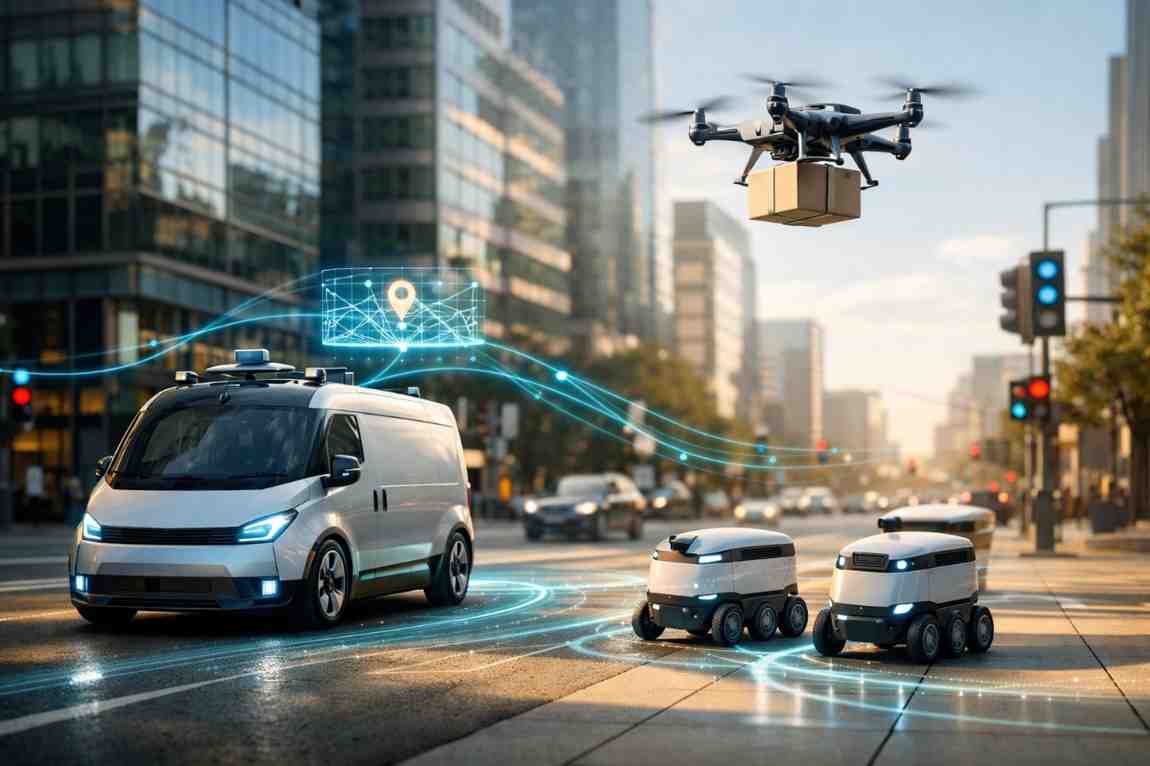
In recent years, rapid advancements in automation and artificial intelligence have transformed the logistics industry. One of the most exciting innovations is Autonomous Delivery System, a technology that enables goods to be delivered without human drivers. Using robotics, artificial intelligence, and advanced sensors, autonomous delivery systems are reshaping how products move from warehouses to customers.
From self-driving delivery vehicles to flying drones, companies around the world are exploring new ways to make deliveries faster, safer, and more efficient. As technologies like Artificial Intelligence, Robotics, and Internet of Things continue to evolve, autonomous delivery systems are becoming a key part of the future logistics ecosystem.
What Are Autonomous Delivery Systems?
An Autonomous Delivery System is a logistics solution that uses automated vehicles, drones, or robots to transport goods without direct human control. These systems rely on sensors, cameras, GPS navigation, and machine learning algorithms to move through environments and deliver packages.
Autonomous delivery systems can operate on roads, sidewalks, or in the air, depending on the type of technology used. They are designed to reduce the need for human drivers while improving delivery speed and efficiency.
Key Technologies Behind Autonomous Delivery
Several advanced technologies power autonomous delivery systems.
Artificial Intelligence
Artificial Intelligence enables delivery robots and vehicles to analyze data, recognize obstacles, and make real-time decisions.
Machine Learning
Machine learning algorithms allow systems to improve their navigation and efficiency over time by learning from previous deliveries.
Sensors and Cameras
Autonomous vehicles rely on sensors and cameras to detect obstacles, pedestrians, and road conditions.
GPS Navigation
Global positioning systems help vehicles determine the most efficient delivery routes.
Internet of Things
Through the Internet of Things, delivery devices can communicate with warehouses, traffic systems, and cloud platforms.
Types of Autonomous Delivery Systems
There are several forms of autonomous delivery technology currently being developed and deployed.
Delivery Drones 🚁
Delivery drones are unmanned aerial vehicles designed to transport packages through the air.
Companies like Amazon have developed drone delivery projects such as Amazon Prime Air, which aims to deliver packages within minutes.
Self-Driving Delivery Vehicles 🚐
Autonomous vans and trucks are being developed to deliver goods on public roads without human drivers.
Companies such as Tesla and Waymo are advancing self-driving vehicle technologies that could support logistics and delivery services.
Sidewalk Delivery Robots 🤖
Small robotic vehicles designed to travel on sidewalks are another form of autonomous delivery.
Companies like Starship Technologies have already deployed sidewalk robots in several cities to deliver food and groceries.
These robots typically travel at low speeds and are equipped with cameras and sensors to navigate urban environments.
Benefits of Autonomous Delivery Systems
The adoption of autonomous delivery systems offers many advantages for businesses and consumers.
- Faster Deliveries – Autonomous vehicles can operate continuously without breaks, reducing delivery times.
- Reduced Costs – Automation can lower labor costs and improve operational efficiency.
- Increased Safety – Autonomous systems reduce the risk of accidents caused by human error.
- Environmental Benefits – Electric delivery robots and drones can reduce carbon emissions compared to traditional vehicles.
- Improved Accessibility – Autonomous delivery can provide services to remote or underserved areas.
Challenges Facing Autonomous Delivery
Despite its potential, autonomous delivery technology still faces several obstacles.
- Regulatory Issues – Many countries are still developing regulations governing self-driving vehicles and drone deliveries.
- Technical Limitations – Autonomous systems must be able to navigate complex environments, including crowded urban areas and unpredictable weather.
- Public Acceptance – Consumers and communities may have concerns about safety, privacy, and job displacement.
- Infrastructure Requirements – Cities may need new infrastructure to support autonomous delivery operations.
Real-World Applications
Autonomous delivery systems are already being tested and used in several real-world scenarios.
Food Delivery
Restaurants and food delivery companies are experimenting with robots and drones to deliver meals quickly.
Grocery Delivery
Autonomous robots can transport groceries from local stores to nearby homes.
Medical Supply Delivery
Drones are being used to deliver medical supplies and vaccines to remote regions.
E-commerce Logistics
Online retailers are exploring autonomous delivery to handle the growing demand for fast shipping.
The Future of Autonomous Delivery
The future of Autonomous Delivery System technology looks promising as companies continue investing in automation and logistics innovation.
Key trends include:
- Integration with Artificial Intelligence for smarter navigation
- Expansion of drone delivery networks
- Development of fully autonomous logistics hubs
- Increased use in smart cities
- Collaboration between governments and technology companies
Conclusion
The rise of Autonomous Delivery System represents a major shift in how goods are transported and delivered. By combining technologies like Artificial Intelligence, Robotics, and Internet of Things, autonomous delivery systems offer faster, safer, and more efficient logistics solutions.
Although challenges remain, ongoing innovation and investment suggest that autonomous delivery will soon become a common part of everyday life.
🚀 In the near future, autonomous delivery systems may redefine logistics, enabling packages to arrive faster than ever—sometimes without a human driver ever touching the wheel.